
Filmmaker Katie Harbin has two short films that recently played at the Asheville Film Festival: Going Home and CSI: Crazy B!*#h.
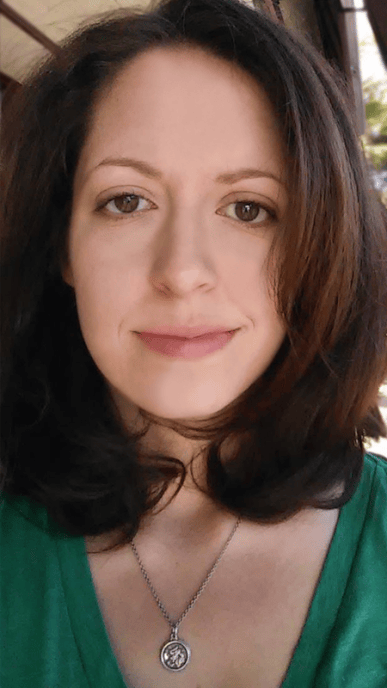
Writer/director Katie Harbin. Photo courtesy of Katie Harbin.
EoM Senior Interviewer Thomas Manning attended the fest and met Harbin, and the two later connected for an extended interview over Zoom. You can read their conversation below, which includes a look at the progression of Harbin’s career on the indie film circuit and the significance of film festivals within this ecosystem.
This interview has been edited and condensed for clarity.
Thomas Manning: We were just talking about [your hometown] Greenville, Tennessee. You’ve been a little bit all over the place throughout your life. Originally from Greenville, you went to Florida State for school, and you’ve spent some time in LA as well. And you and I met at the Asheville Film Festival in North Carolina, not too far from your hometown of Greenville. Can you take me through some of that evolution of the different stops in your life and how that’s influenced who you are as a filmmaker?
Katie Harbin: Well, it kind of even starts before I got into film, because my mom was in the Navy for 20 years. So my whole childhood, we just moved from place to place. I was actually born in Puerto Rico, and then we moved to New York, and we were in Virginia, and Georgia, and then we kind of landed in Tennessee when she got out of the service. And then from there, I studied at [East Tennessee State University] and got a little bit of the acting bug. For a while – I did plays and stuff – I thought I wanted to do acting. So after school, I got a local agent. And I was auditioning for car commercials and stuff like that. And then, I decided that I really wanted to learn how to make a film – like, how to actually do my own things, because I have a lot of creative ideas and I wanted to figure out how to make films. So, I applied to film school, and that’s how I got into the graduate program at Florida State and went to film school there. That two-year program, which was amazing – they take you through every position on set. I really enjoyed my time there. And then from there, I moved back to Tennessee for a little while, and then finally landed in LA. And I’ve been there since 2015 or so. So kind of just trying to make it out there.

A still from the film CSI: CRAZY B!*#H. Photo courtesy of Katie Harbin.
Manning: So you’ve lived in places all across the country and you’ve worn many hats on film sets as well. And I think all of that funnels into the two projects that we’re talking about today that you had at the Asheville Film Festival. You had Going Home and CSI: Crazy B!*#h. One of these is a very personal, emotional family drama. And then the other one is a satirical crime investigation piece. Do these two kind of represent both sides of your soul?
Harbin: Oh yes, 100%. And I feel like when I studied theater in undergrad, you’ve got the two masks: Tragedy and comedy, and they go hand-in-hand. So, I always say with my films, ideally I like to live in that dark comedy space where I could make you laugh and make you cry in the same film. So, that would be ideal. But, in a short, there’s not a lot of time for genre blending. You’ve just got to pick a lane, you know. But, yeah, definitely reflects both of my sides. I’m an overthinker extraordinaire.
Manning: You mentioned this story at the festival in the Q&A, but for our audience here, the origin of Going Home was – basically, you noticed a pool that was overgrown with algae and you said, “I want to build a story around this.” Can you share a little bit of that for our audience and the seed of that idea?
Harbin: Well, Mark Duplass is a huge hero of mine and he has this speech – if you haven’t seen it, I’m sure it’s famous by now – but he had a SXSW speech where he talked about the “available materials school of filmmaking” and how you should write things around what you have. Like in his first feature, he did The Puffy Chair, and he had two recliners and he’s like, “We’re gonna set one on fire.” And that was his big stunt. And I always found that stuff so inspiring, because you can spend your whole life waiting for permission, waiting for someone to pick you and say, “Okay, it’s your turn. You make the movie.” But I just feel like that opportunity may never come if you sit around waiting for it. So yeah, my friend had a really gross pool that he had stopped maintaining and I just asked him, “Can we shoot in your backyard?” And he’s like, “Sure. I’m not using it, obviously.” Also in his backyard were these lemon trees that he never took the lemons off of. They just rotted on the ground. It felt like a good metaphor for wasted potential or something. So I was like, okay, how can we do this? Maybe a brother and a sister who choose different paths in life. One is very ambitious and wants to leave and see the world, and one is happy to stay home. I think, too, growing up with a sibling or something, a lot of us want to bring our people with us – like, maybe your path is someone else’s path too. I always kind of thought… I romanticize Mark and Jay Duplass – they’re this filmmaking brother duo. I’m like, what if my brother went and made movies with me? Wouldn’t that be fun? But you know, not everyone wants to make films, so that’s not everyone’s path. So, coming to that realization – even though you walked your whole childhood with someone, you realize at a certain point you’re going to be walking your own path now. And it might be different from your siblings or your family or your friends, but that doesn’t make it wrong, it just makes it different. The theme I was trying to explore was ambition versus just taking what life gives you. And neither is wrong. It was really important to me that each character have a very valid viewpoint, because it’s just difference of opinion or worldview that’s causing the conflict. It’s not the character or their choices. So that’s kind of where it started.

A still from the film CSI: CRAZY B!*#H. Photo courtesy of Katie Harbin.
Manning: And as someone who’s been in a small town my whole life and has a deep love for my small town – but also a deep love for broader horizons out there and exploring – I thought that this film spoke to a lot of the internal conversations I have with myself. Obviously that’s something you heavily relate to as well. But I’d like to ask about casting your two central actors for this, Bronwyn Morrill and Casey Leach. Just within five minutes of screen time, I think they have totally realized characters and it feels like a sibling duo who has years and years of history. Can you talk a little bit about finding them for this film and what they brought to it?
Harbin: I had known both of them from my time at Florida State, and they both also had moved out to Los Angeles. I worked with Bronwyn before on shorts within school, and I always wanted to work with her again because it was such a great experience. And then Casey, I had seen him in other people’s shorts and thought he was very talented. So I reached out to them both separately and asked if they’d be interested in teaming up, because at that point it would be a passion project and not something paid. They were both on board, and when I told each of them that the other was going to be playing the role opposite, they were so excited – because apparently, they were really good friends from Florida, and I just didn’t know that. So they knew each other already. I think that really helped. They already had a shorthand and had a lot of fun while we were off trying to figure out lighting and setups and camera position. They got to have a lot of fun chatting in between setups and stuff. They just already had a relationship that probably lent itself to the feeling close, which was really nice – a chemistry.
Manning: You kind of spoke to this there briefly, but within the indie filmmaking community, it’s easy over the years to develop very strong collaborative relationships with people – because often times, you’re working on similar projects. You end up crossing paths with people, and it might not even be intentional at first that you seek out this person to work with, but over time you cross paths enough times and you’re like, “Well, I want to be an actual creative partner with you.” Is that something that you’ve seen to be true over the course of your career?
Harbin: Yeah, I feel like you cross paths with people and kind of admire what they do from a distance. It’s a weird situation asking people to collaborate with you. It feels a bit like dating, or asking to go steady or something where you’re like, “Hey, you want to make a movie together?” Ideally, I’ll get to a place sometime soon where I can have a legitimate budget and feel like I’m offering them something besides exposure – something a little bit like an actual paycheck. But yeah, I feel like it’s really easy to find amazing collaborators just in film generally. Everyone is so talented and great at their own corner of something. Even my DP on both the projects actually was from FSU, Dustin Leboeuf. He’s since moved back to Florida and is doing marketing videos and stuff there. He’s very talented too, and did a great job on the film. He was my go-to person to shoot with until he moved back to Florida. So, now I’ll be branching out and trying to find more DPs to work with as I go. It’s just part of the process.
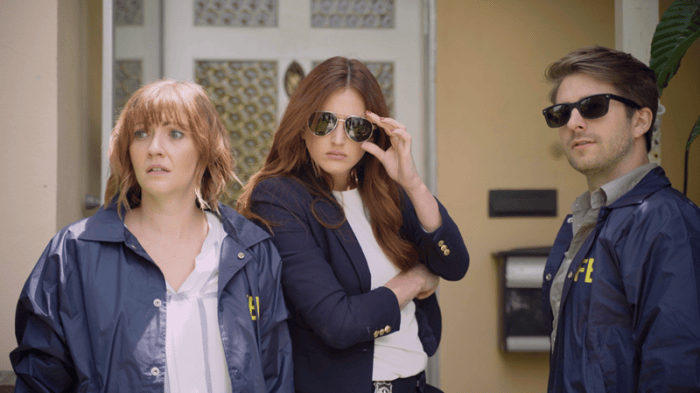
A still from the film CSI: CRAZY B!*#H. Photo courtesy of Katie Harbin.
Manning: Both shorts are very distinctive visually – they had to communicate very different feelings and very different tones visually. Can you compare and contrast your photography approach to both of the films here?
Harbin: For Going Home, we shot on a Blackmagic URSA Mini. We were trying to shoot something a little more kinetic, kind of in the style of The Bear where it’s showing this crazy family fighting. Sometimes you can communicate a lot by how much you cut and how much you don’t cut, and sometimes it feels more intense when you don’t cut. So we’re trying to get as much of the argument with blocking and in a one-shot – like when they get up from their chairs and walk through the pool, and turn into an over-the-shoulder – these kind of things. It’s a totally different feeling than, maybe we’re trying to go for a more polished look in CSI: Crazy B!*#h. On that one, we just used a Canon 5D. We rented one light that could change colors that we used for the cop cars and for the bar scene that we needed some strobe-y kind of effects. But then in Going Home, it was just all natural daylight with silks, and the sun was our source. We just bounced on giant bounce boards to beam the actors in the face.
Manning: You mentioned Dustin and you said he’s moved back to Florida now, so you’re going to have to look for another DP. When you have worked with someone for so long and then you know that it’s not going to be feasible anymore for whatever reason, that’s probably got to be almost like a breakup as a filmmaker. It’s not anybody’s fault or any one reason for it, but just logistically that’s what happened. Is that challenging to know that you’ve kind of got to go through that process again and to find a DP that you’re going to work closely with?
Harbin: I mean, everybody has a different style and a different way of working. I haven’t given up on Dustin – he’s still DPing things in Florida, so maybe if I got a budget if we shot in LA or Tennessee or North Carolina. I guess it would depend on his family, and if he could get away and that kind of thing. Yeah, finding someone else, you can only tell so much from reels, and you build up a shorthand working with someone. I have to see someone I can vibe with who will bring the good vibes to set and make it look pretty at the same time.
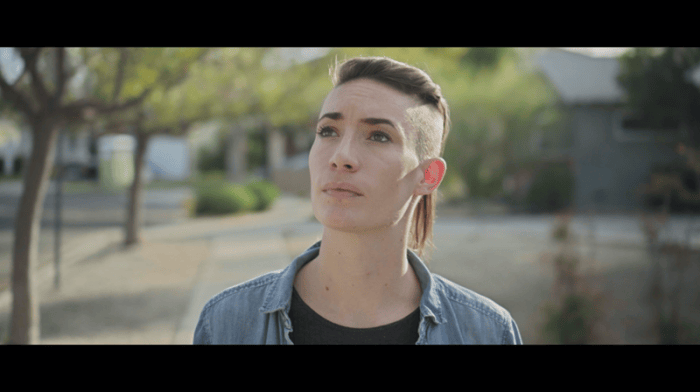
A still from the film GOING HOME. Photo courtesy of Katie Harbin.
Manning: As you mentioned earlier, one of your first introductions to film production was learning how every department works and how every aspect of the filmmaking works. How do you think that affects what you do as a director? How do you think it helps you become a better guide for a project?
Harbin: Knowing every position on set is a huge asset. It helps in producing as well. But as a director, [it helps so that] you’re not asking for insane things and you kind of understand if your producer tells you no for something. You’re like, “Oh this would take a lot of money,” or “Oh, why would we shoot in this particular order?” Just understanding how each piece fits together really helps you make your decisions, and I think that also helps with budget too. You can do a lot with a little if you understand how everything can work efficiently together. You can arrange your setups in a way that works better and call people so you’re not wasting people’s time. From every part of the production, it helps.
Manning: These two short films that we’re talking about – these were filmed a few years ago. They’ve been on the festival circuit this whole time. For filmmakers like you working in the fully independent space, you are quite reliant on independent film festivals like in Asheville. Can you speak a bit to that festival space and how crucial they are to filmmakers like you to get your work out there?
Harbin: I think they’re awesome, especially if you go to them. A lot of people, maybe they’ll make a short and then not go. I think what helps the most is going and meeting other filmmakers, meeting collaborators. You never know who is going to be interested in your work. The first film festival I ever got into in LA back in 2015, I met one of my best friends there. We just started chatting film, and fast forward to last year, she was a bridesmaid in my wedding. You meet great people, like-minded people, who are just as obsessed with filmmaking as you are. And also, potentially collaborators and things like that too. You meet other festival directors, people who could have other opportunities for your film. They’re really helpful as far as networking, and it’s also helpful to share with an audience. A lot of the festivals, they bring an audience that your film may not have even reached online because they don’t know about you.
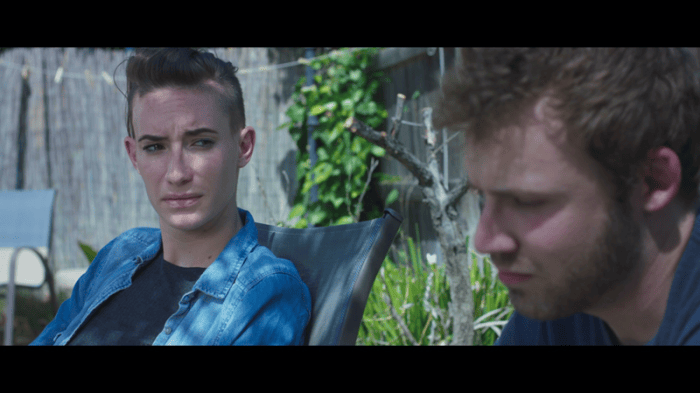
A still from the film GOING HOME. Photo courtesy of Katie Harbin.
Manning: I’ve done some work on the direction side of film festivals as well. There’s a film festival here in Cleveland County, North Carolina called the Real to Reel Film Festival, and I served as director for a couple years. I was always blown away by the community that it could bring together. It could introduce our local audiences to films from all over the world, but also introduce them to filmmakers who will travel from all across the country. A small rural town like this, there’s not really many opportunities to have that direct audience-filmmaker interaction. I think that’s one of my favorite aspects of what a film festival is able to accomplish and to build that bridge in that regard.
Harbin: Actually with my thesis film in grad school, I came back to the Johnson City Film Festival. And I just remember this one girl came and she was like, “I’m in school here at ETSU and I want to do film, can I have your autograph?” I’m just like, I just graduated film school. I wasn’t, you know, a fancy Hollywood person. She was so inspired and I thought that was really cool, too. I was just a person in a small town hoping to make films, too. You never know what impact your film can have on other people, to inspire them to chase their dreams or things like that.
Manning: You’ve been working in the short [film] space and the commercial space, and I know you’ve done some sketch comedy as well – but ultimately, are you hoping to build into a feature filmmaking career. Is that kind of your path?
Harbin: Oh, definitely. That’s the next step. I feel like I have at this point outgrown the shorts and I’m ready to try a bigger, longer project. Because it’s just such a different beast and it really is the next step. I feel like I’ve learned as much as I can from one or two or three-day shoots, and I’m ready to do one that’s like a weeks-long shoot and to tell a larger story. It really is a different art form. Just condensing everything into a tiny short is a totally different space than a feature where you have a little more breathing room and a little more time to explore a story. So I want to try to tell a fuller story with a feature-length film. I’m working on writing right now actually.
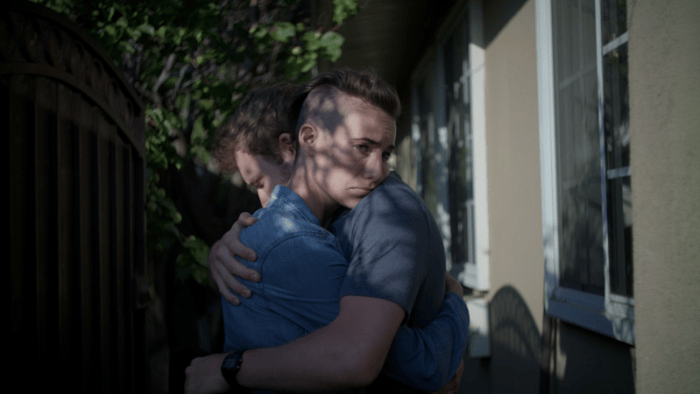
A still from the film GOING HOME. Photo courtesy of Katie Harbin.
Manning: So have you spent some time on feature film sets and [productions] that go on for weeks at a time?
Harbin: At this point, I haven’t been on a lot of features. But I’ve helped on a bazillion – I’ve lost count, it’s that many – short films. I do also have friends who I’m looking to who have made features and asking them what they’ve learned and how I can follow in their footsteps and stuff. So, I feel like I have enough people that I went to school with that have done it that I feel like it’s my turn next.
Manning: You mentioned the Duplass Brothers – I love Mark and Jay and all their work. Who are some of your other filmmaking heroes that you look at the path that they’ve taken, and if it goes your way, that’s kind of the path that you would like to take?
Harbin: You know, I like to recommend female filmmakers. I feel like they often don’t get a lot of publicity. Even people who love film, they often haven’t heard of some of my favorites. Even just for Going Home, I was pulling inspiration from this one director, Andrea Arnold. She is a huge inspiration and her movie Wasp won an Oscar back when it first came out. And then she did American Honey – it was a really great movie, and I think she does a great job of making
kind of ugly things beautiful. She’s a hero of mine. Another inspiration is Jim Cummings, the Thunder Road story – just the inspiring indie stories of: You make your short, you make your feature, and you just keep going. There’s a few others – I really am a fan of Miranda July and some of her films. Lynne Ramsay, she’s a great one. I think those are some of my favorites.
Manning: Jim Cummings, like you mentioned starting out in the short films and just building from there and then he’s gone on… something that I really appreciate about what he does and all those filmmakers you mentioned: They put their support behind rising filmmakers and people who are just starting out. People who are now in those positions that they were in when they began.
Harbin: It’s a long path to direct films. So, I love it when people send the elevator back down and help the next generation make their things, too.
Manning: In terms of promoting your work and getting your work out there, the reason that we’re sitting here talking today, how has that challenged you? How do you go through different avenues to find people who might want to spotlight you and highlight the work that you’re doing?
Harbin: Well, I have not tried this before actually. I don’t know what I thought worked before, but all my shorts I would get into a festival and I would just go and be like, “Well, that was cool.” I only just came to the realization this year, like, “Oh, wait. You have to tell people about your work.” I’ve never been great at self-promotion, but to get people to view your things, you need to do that. So, this was my first try. I was like, “Well, I’m going to be in North Carolina. Let me look and see if anyone in North Carolina writes about movies.” I did some research and made some press kits and just tried it out.
Manning: You mentioned you’re in the writing process for a feature at this point. Is there anything else that you have on the horizon?
Harbin: I’m sure you’re familiar, but the big talk of the town lately is Curry Barker and Kane Parsons, liminal spaces, the YouTubers-turned-filmmakers with scrappy budgets making films – and I hope to be one of them. I’ve been hearing for years that horror is the way to go as far as taking chances on new talent, because maybe people are more interested in the concept versus the specific names attached. So my next step is trying my hand at a feature thriller set in the East Tennessee, Western North Carolina area. I’m writing that now and I hope to come back and shoot it here eventually. Because the area is beautiful and I grew up here, and they say to write what you know – and I feel I know how beautiful this area is. I don’t know why more films don’t shoot here. So that’s the plan. I want to come back here, make a movie, spotlight my hometowns, and share the wealth.


CSI: Crazy B!*#H Official Synopsis:
This crime scene just got crazy.
Going Home Official Synopsis:
A young woman returns home to find that sometimes growing up means growing apart.
Screened during Asheville Film Festival 2026.
Thomas Manning is a member of the NCFCA, SEFCA, and CCA, and also the co-host of the television show and radio program Meet Me at the Movies. He has served as a production assistant and voting member on the Film Selection Committee for the Real to Reel Film Festival. Additionally, he manages his own film review and interview site, The Run-Down on Movies. Manning is a graduate of Gardner-Webb University with a double-major in Communications and English. His passion for cinema and storytelling is rivaled only by his love for the music of Taylor Swift.


Share this:

Categories: EoM Presents, Filmmaker Interviews, Publications
Leave a Reply