
There are some films whose concept is so engaging on paper that it must feel like a slam dunk before production even starts. In the case of director Timothy Woodward Jr.’s (Hickok) action thriller Til Death Do Us Part, the logline is essentially that a bride-to-be must fight off her fiancée’s groomsman as she tries to flee the alter. Adding to it, the film features a lead actor in action films with stunt experience at the center who plays off another fight-capable actor as the best man, who are then surrounded by a motley crew of characters. With concepts like these floating in the air, a feeling of a little John Wick (2014)-meets-Ready or Not (2019) sets in, which only adds to the intrigue. Unfortunately, the script from Chad Law (Shrapnel) and Shane Dax Taylor (The Best Man) doesn’t deliver on the prospective promise, even with the twists and turns away from straight action thriller into drama that it seeks to execute.
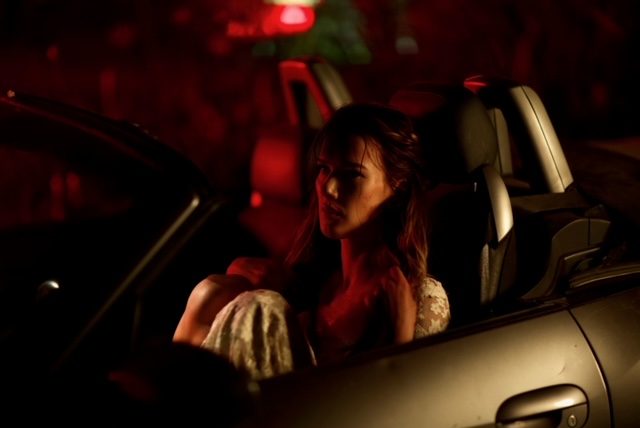
Natalie Burns as Bride in TIL DEATH DO US PART. Photo courtesy of Born to Burn Films.
Just before walking down the aisle, the bride-to-be’s (Natalie Burn) nerves and doubts get the best of her and she runs for it. Tasked with locating her and trying to keep her in one place so that the groom (Ser’Darius Blain) can try to chat with her are the best man (Cam Gigandet) and the rest of the groomsmen. What would be a standard issue cold feet situation escalates quickly as each of them are not what they appear to be on the outside and their training as killers kicks in. Will there be a happily ever after for the loving couple or will “til death do us part” come before the vows?
Let’s be clear here, expectations are a movie killer. Everyone’s got them, everyone falls prey to them in one way or another. Between the trailer and the marketing materials, it’s easy to understand why audiences would have high expectations for Til Death with the feats of impressive stunt work from Burn (Black Adam), the opulence of the set design, the inclusion of neon in the lightning, and, of course, the hints of comedy to dull the horror. Add in some off-kilter killers and you’ve got yourself some shadowy figures doing wetwork in the night. In this respect, the marketing fails the film which is, honestly, far less interested in the action and more in the interpersonal, which is why the nearly two-hour runtime offers more dialogue than extended ass-kickings. On the plus side, the brevity of the fights highlights the skills of the fighters in the scene, specifically those of Burn’s bride, who makes good use of the surroundings to improvise victory. (I think there’s something more effective about a quick fight between skilled adversaries (Kill Bill: Volume 2 (2004) than one that drags out.) The downside is that the film isn’t just about the bride surviving the night in her bridal gown (hence the Ready or Not energy), but about something deeper that is explored via a side story told alongside the action. This side story is interesting and lays the groundwork for the larger themes of the film, but it’s not what was advertised, thus, setting up audiences for a feeling of bait-switch.
So let’s talk about the film itself, rather than expectations.
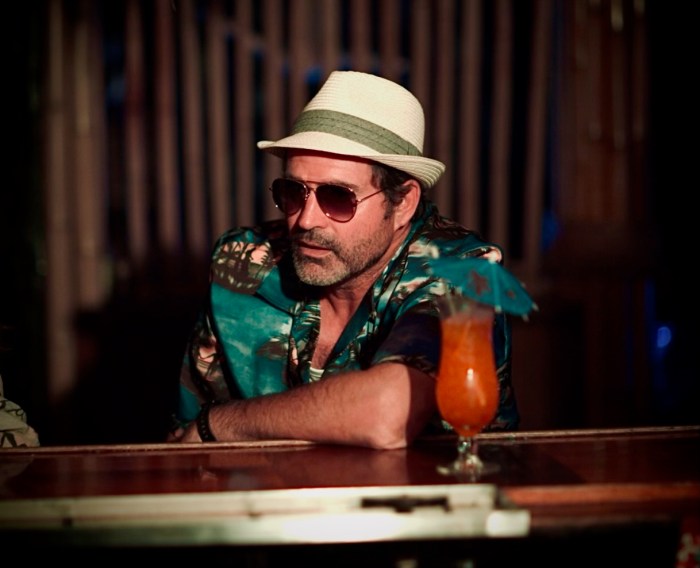
Jason Patric as Husband in TIL DEATH DO US PART. Photo courtesy of Born to Burn Films.
Til Death is a thematically meaty drama wherein the pursuit of freedom, of personal autonomy, comes at a cost. The nameless characters we follow continually refer to a larger organization, using terms like “University” and “Dean” in the same way that the John Wick films refer to the High Table and other ominous figures. The fact that these characters lack identifiable names with the exception of two — Neb Chupin’s (Pig Killer) Big Sexy and Pancho Moler’s (3 From Hell) T-Bone — speaks to the lack of identity, the interchangeability of each one within the larger organization. Based on a comment by Big Sexy, these names are self-given, meaning that they serve as a rebellious act against the larger idea of conformity within the secret group of trained killers. This is, of course, merely an intellectual read on the material, rife with interference, as the text of the narrative doesn’t provide any direct information in this regard. Instead, and this is where the problems of the film begin, it constantly feeds the audience the same information again and again, often in a way that’s at odds with the established rules.
For instance, there are some members of the groomsmen who are eager to go toe-to-toe with the bride, as though her attempt to leave the organization erases all of their shared history and comradery. Perhaps the intention is for there to be dissent in the ranks as Gigandet’s Bestman (so titled in the credits) tries to keep everyone calm on site, thereby creating tension as some try to confront the bride with lethal measures. This is where some of the problems creep in. They want to kill her for breaking the rules? Ok, fine. They don’t have their tools due to the “no weapons” rule of the wedding, a smart built-in problem that levels the playing field as the bride didn’t bring weapons either since (a) her running seems improvised and (b) killing her supposed friends didn’t seem to be a thing she wanted to do. Except, each one of them resorts to violence in a way that suggests a desire to have always wanted to go head-to-head like this. Perhaps it’s the misogyny in the dialogue or some other unknown thing from their shared past, but where most of those who go up against Keanu Reeve’s John Wick seem to at least approach it from a non-personal, respectful, and professional manner, everything about the fights in Til Death seem incredibly personal and degrading to the character. If not for Gigandet’s high, almost manic energy as he tries to stick to his titled role and keep the bride safe, there’s literally no reason that these men couldn’t operate as a proper group to compel the bride to stay put safely (or, at least, with minimal bruising). Instead, there’s a cat-and-mouse game on a small premise wherein, logically, any fisticuff in one area should bring all the rest running and, for some reason, doesn’t. The music playing in the main open room isn’t so loud as to dampen people banging around the rooms with deadly force. Of course, this is the same movie which has our lead character throw her phone out of her car (as if to prevent tracking it) only to immediately turn into the driveway of where she’s going. I’d applaud the film for doing this on purpose, using it as a trap that the bride is setting because she sees through her former friends as her only means of a chance at freedom, except that’s not the route the script goes at all. One of several things that could be clever in the execution, but aren’t utilized in favor of something more pedestrian.
Even though the film’s been out in one form or another since August, getting into the dual narratives of the film and the way they dovetail together would involve a few too many spoilers, so allow me to say this: it’s a more interesting portion to see what goes down between Burn and Blain (Jumanji: Welcome to the Jungle) in those sections playing opposite Jason Patric (The Losers) and Nicole Arlyn (Clay Pigeons) than the central plot. The main portion is just fisticuffs wherein Burn gets plenty of opportunities to demonstrate her skills as a stuntperson, using several imaginative means to combat and/or dispatch foes, even if the cinematography during these scenes tends to reduce the momentum of the action instead of inciting the audience to feel like they’re right in it. But in the other portion, the concurrent narrative, there’s an intriguing mystery that lays the emotional groundwork for the film as a whole, even if it adds elements that are likely meant to add TNT-levels of revelations and, instead, just feel piled on for the sake of it.

L-R: Natalie Burns as Bride and Ser’Darius Blain as Groom in TIL DEATH DO US PART. Photo courtesy of Born to Burn Films.
Once one gets past the expectation set by the marketing, Til Death offers something interesting to think about regarding the choices we make when young, the weight of a life meant serving at the cost of one’s self, and the oxymoronic way in which operatives are only considered valuable until they begin to question the operation. If not for aspects of the plot which seek to serve the needs of an action film versus the characters and maintaining logic, what Til Death offers could be the start of a new series wherein the bride tries to take back her autonomy. But we can’t deal in what ifs any more than expectations; rather, we have to focus on what we have. Ultimately, Til Death is a great logline with questionable execution. A bummer for all involved as they clearly didn’t think so in the performance.
In select theaters August 4th, 2023.
Available on digital September 19th, 2023.
Available in the U.K. on digital April 8th, 2024.
For more information, head to the official Cineverse Til Death Do Us Part webpage.
Final Score: 2.5 out of 5.


Leave a Reply